
GPT Image 2 Review
💡 Article Summary: How powerful is the mysterious AI art model GPT Image 2 (codenamed duct-type-2) that has been taking the internet by storm? This article takes an in-depth look at the core strengths of this suspected next-generation OpenAI image model, covering Chinese text rendering, realistic lighting physics, high-fidelity UI generation, and character consistency. Get a head start on GPT Image 2's prompt layout guide and see how it turns AI from a "visual toy" into "production infrastructure."
📑 Table of Contents (click to jump)
- ▍ Introduction: What Is GPT Image 2? Why Is Everyone Searching for duct-type-2?
- ▍ 01 Text Rendering and Extreme Layout: GPT Image 2 Masters Mixed Chinese-English Typesetting
- ▍ 02 Real-World Physics and Lighting: Finally Rid of AI Art's "Plastic Filter Look"
- ▍ 03 UI Design and Interaction Reconstruction: A "High-Fidelity" Power Tool for Product Managers and Designers
- ▍ 04 Character Consistency and Re-editing: Say Goodbye to Blind-Box Generation and "One-Off" Assets
- ▍ Conclusion: Welcome the GPT Image 2 Era — Treat AI as Your Personal Designer
▍ Introduction: What Is GPT Image 2? Why Is Everyone Searching for duct-type-2?
Recently, the global AIGC tech scene and Twitter timelines have been flooded with GPT Image 2. It all started when developers in anonymous battles on the LMSYS Chatbot Arena (the LLM arena) precisely captured a mysterious image generation model codenamed duct-type-2.
Although the stable version in OpenAI's official documentation is still the previous generation (Image 1.5), recent gray-scale tests and community leaks suggest this new model — widely believed to be GPT Image 2 — is a leap forward on another level. It is no longer just "good at drawing pictures," but has truly begun to "understand design and typesetting."
In the past, AI image tools would garble text the moment you added a few characters, and collapse on any complex layout. To verify GPT Image 2's real productivity, I used the extreme prompts previously used to stress-test other top-tier AI models to give this suspected next-generation OpenAI model a full-blown interrogation. The results show that with GPT Image 2, it's time to upgrade our prompt-writing approach from simply "describing a picture" to professionally "handing down a requirements document (Task)".
Below is a hardcore review and image-generation guide covering GPT Image 2's four core dimensions.
▍ 01 Text Rendering and Extreme Layout: GPT Image 2 Masters Mixed Chinese-English Typesetting
When judging how strong an AI image model is, don't start with grand scenes — start with the details that test logic the hardest: mixed Chinese-English text, small captions, and multi-module layouts. GPT Image 2 demonstrated stunning typesetting logic when handling complex Chinese commercial infographics — it understands whitespace aesthetics and even automatically matches elegant serif or sans-serif fonts based on the product type (such as skincare or new-style tea drinks).
Test dimensions: Visual hierarchy of commercial posters, accuracy of numbers/prices, and commercial beauty of the layout.
Generation Prompt:
"Please design a 3:4 vertical tea-drink poster for a brand called '1点点' (YiDianDian). Overall style: fresh, natural, youthful, energetic, minimal and approachable. The main subject is a beautiful jasmine milk green tea (refreshing milky color, silky texture, served in 1点点's classic transparent cup). The poster must accurately display the following text: '1点点', '茉莉奶绿', '人气推荐 中杯 16 元 大杯 19 元'. The poster should have a clear promotional hierarchy, with a focus on testing small text, numbers, and Chinese font aesthetics. Keep brand recognition and avoid a cheap e-commerce look."

🎯 Review result: Crisp, error-free text, clear price hierarchy, and a layout ready to be delivered as a commercial draft. GPT Image 2's text generation is currently T0-level in the industry.
▍ 02 Real-World Physics and Lighting: Finally Rid of AI Art's "Plastic Filter Look"
Generating beautiful AI portraits has long ceased to be difficult — the real technical barrier is producing documentary-style photos without the "AI plastic look." When handling complex mixed light sources (such as alternating warm and cool lighting in a mall) and natural human imperfections (like oily skin, wind-blown hair, or a candid expression not looking at the camera), GPT Image 2 reaches a remarkably high documentary-photography standard.
Test dimensions: Complex mixed multi-source lighting, physical material reflections (glass/floor tiles), and natural, life-like expressions.
Generation Prompt:
"Generate an extremely realistic documentary-style photo of a shopping mall on a weekend evening, at the escalator entrance of a large shopping center. A man in his early 30s of Asian descent is just stepping off the up escalator, holding a shopping bag in his left hand while looking down at his phone to reply to a message in his right. His hair is slightly messy, and his face has a slight oily sheen. The mall lighting is complex mixed light: warm white top lights and cool white window display lights coexist, with highly reflective floor tiles. The shot should look like a photographer's candid real-life moment — no staged fashion pose."

🎯 Review result: Perfectly reproduced the complex physical lighting of the scene. Skin texture and minor imperfections are extremely realistic, breaking the "beautified, skin-smoothed filter" that previous AI models forced onto images.
▍ 03 UI Design and Interaction Reconstruction: A "High-Fidelity" Power Tool for Product Managers and Designers
This is the core highlight where GPT Image 2 truly dazzles and pulls ahead of its competitors: it deeply understands UI interaction and frontend structural logic. It can not only accurately reproduce phone status bars, search boxes, and bottom tab navigation, but also render ultra-realistic "Recommended for You" double-column waterfalls and price comparison layouts showing current vs. original prices — it even generates matching licensed cover art for interfaces like music players.
Test dimensions: Mobile app component structure, mixed image-text layout sensibility, and modern commercial design quality.
Generation Prompt:
"Generate a high-fidelity screenshot of a mobile e-commerce app homepage. The top shows a status bar with the time 9:41, followed by a search box. The main area includes a 10-grid functional zone (e.g., 百亿补贴 [Billions of Subsidies], 秒杀 [Flash Sale]). The middle section is a limited-time flash-sale module with a countdown. Below is a 'Recommended for You' double-column product waterfall with product images, titles, and prices. A fixed bottom Tab Bar is present, with 'Home' highlighted. All Chinese text must be clearly readable, and overall it must look like a real product interface at first glance."
🎯 Review result: Achieved near-pixel-perfect component library layout. For UI/UX designers and product managers, GPT Image 2 is an absolutely formidable prototyping efficiency tool.
▍ 04 Character Consistency and Re-editing: Say Goodbye to Blind-Box Generation and "One-Off" Assets
For illustrators and content creators, keeping character traits or art style consistent has always been a pain point in AI blind-box generation. With GPT Image 2, whether it's showing the same anime character in 16 different expressions or dressing up your pet in various uniforms while keeping patterns consistent, the new duct-type-2 model performs with remarkable stability.
Test dimensions: Core character trait retention (face shape/hair color/eye color/outfit), grid layout, and localized control.
Generation Prompt:
"Generate a 16-grid expression chart of an anime girl with long silver hair and blue eyes. Her face shape, hairstyle, and outfit must remain highly consistent across all cells. The sixteen expressions should include: happy, sad, angry, surprised, crying, heart eyes, etc. The grid cells must be clearly separated."
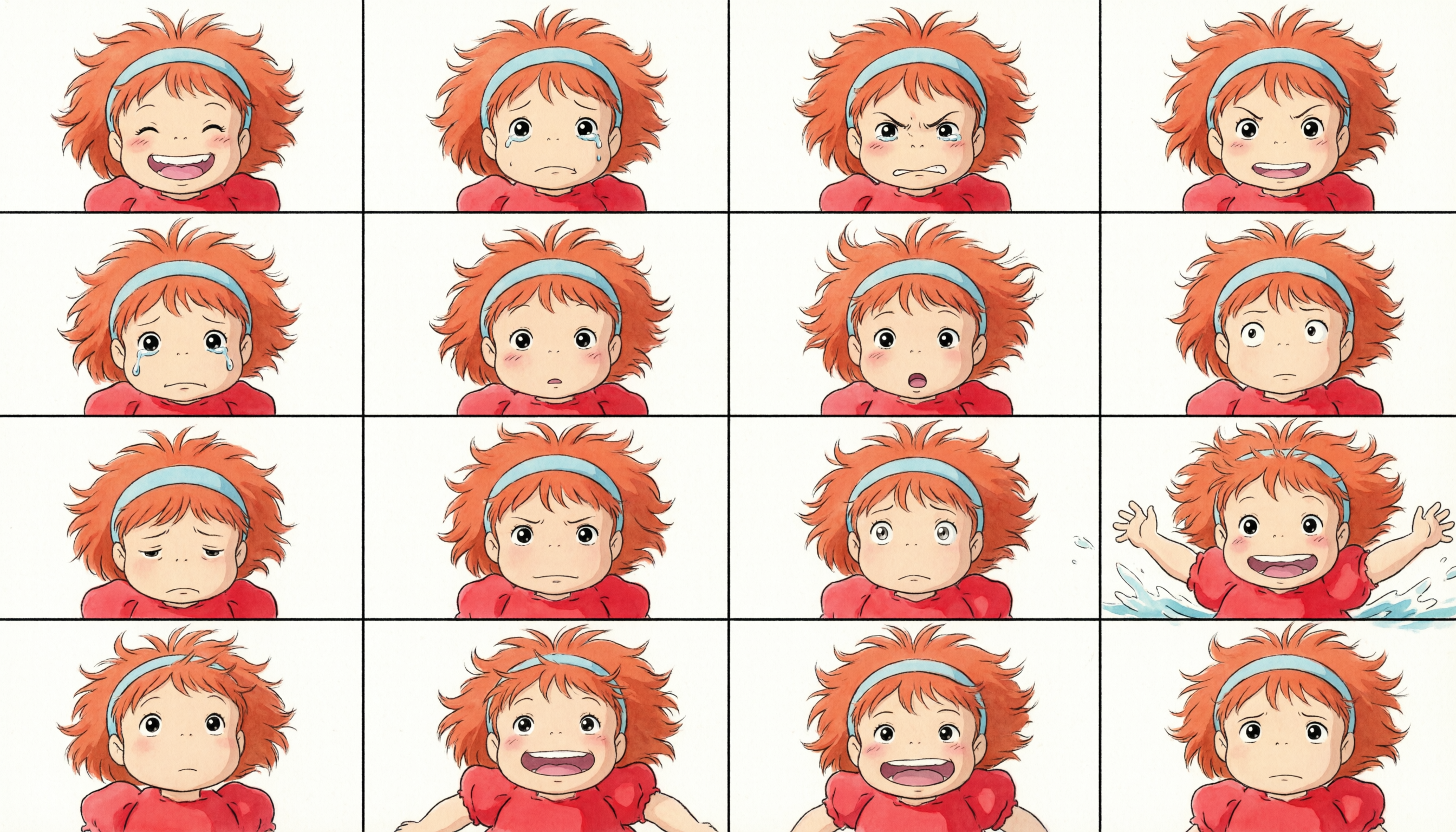
🎯 Review result: Creators can finally leave the "blind-box era" behind — character feature locking and contextual understanding under the same prompt have been upgraded on an epic scale.
▍ Conclusion: Welcome the GPT Image 2 Era — Turn AI into a Productive Designer
From duct-type-2's stunning debut, it's clear that when an AI image model can flawlessly follow complex instructions, accurately render dozens of Chinese characters, and automatically complete polished layouts, it has crossed the line from a mere "visual toy" into true "production infrastructure."
In the upcoming GPT Image 2 era, we need to shift our mindset: when using AI, provide a "requirements document (PRD)" just as you would to a human freelance designer, rather than merely piling up fancy adjectives. This leap in the AI ecosystem will not only drive sky-high search-engine interest but also rapidly reshape the way we create digital assets — genuinely lowering the bar for creation and design for everyone.